Copper peptides crossing the skin
The cream meets a barrier. That encounter deserves more attention than the container ever did.
Skin samples in the laboratory
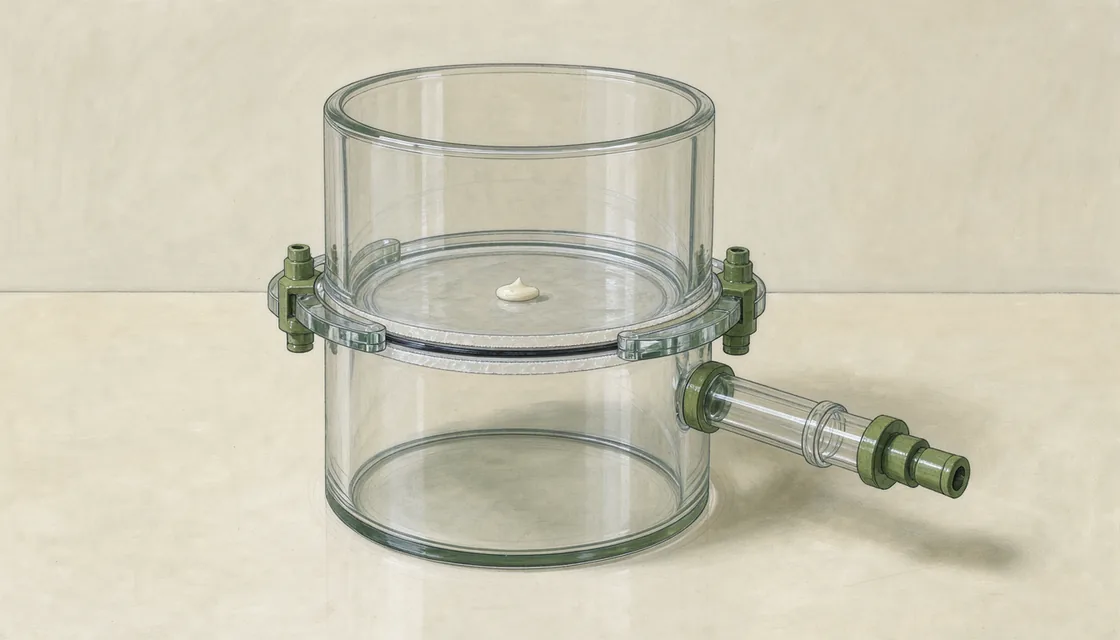
The human skin-layer penetration study examined human skin outside the body, in a laboratory setting. Copper was applied as a GHK-Cu tripeptide preparation. The researchers measured copper passing through skin and copper retained there.
I enjoy the plainness of that question. Put a material on one side of a barrier and follow what happens. The interest comes from the barrier’s physical presence, with the skin layer itself forming part of the experiment.
“Human skin” needs that setting attached. These were skin samples. The study’s transport result concerns what happened to copper in those samples, under the tested conditions.
Copper passing through and copper retained
Over 48 hours, the skin penetration experiment measured copper permeation and retention as a dermal depot. The depot is the material retained in the skin. I care about both destinations because “penetration” alone leaves them unresolved.
Copper crossing a sample and copper remaining within it describe different parts of delivery. Neither phrase, by itself, supplies a visible skin outcome. The experiment gives a transport result with a defined material and setting.
The repeated word copper matters to me. For me, retelling this as an intact peptide’s complete journey would overstate the measurement. The measured endpoint deserves to stay visible.
Formulation strategies
The 2025 review of topical GHK identifies poor stratum-corneum permeability as the central delivery challenge. The stratum corneum is the outer skin barrier discussed in that review. It examines palmitoylation and microneedle pretreatment as enhancement strategies.
That makes formulation an absorbing topic in its own right. The way the preparation meets that barrier fascinates me. A modification or a pretreatment introduces another experimental condition, so the preparation deserves its full description before the result travels further.
I prefer puzzling over the cream’s preparation to chasing a more elaborate route of administration. The topical findings here give no personal regimen. The facial cream page returns to what the reviews report about skin-related outcomes.